
Learning to Keep Pace: A Reflection on My First Month in Washington, D.C.
by Grace Taylor (’28)
One of the best ways, in my opinion, to explore a new city and quickly get your bearings is to run. Run down the main streets, past central city landmarks, all the while connecting the places you know to the places you don’t. In running, you take in not only the city on a map, but the people and energy that fill the bustling streets and metro. And in running, I found that it was the perfect pace to see the city of Washington, D.C.
I arrived in DC at the end of August, alongside my cohort of nine other politics students, to begin a semester at Wake Washington. Though expecting to be met by the cool beginnings of fall, I quickly realized that summer was far from over in the city. Despite this heat, humidity, and an entourage of mosquitoes that absolutely refused to leave me alone, it didn’t take me long to take off at an energized pace from my new apartment towards the Capitol and National Mall. In running through city hotspots, passing monuments that I’d only ever seen on postcards, I began to understand D.C. a bit better mile by mile. The “hustle and bustle” of our nation’s capital wasn’t just some idea or line they explain to tourists as they cross the Potomac. No, it’s a true observation of the unique vitality this city has. Without even knowing where I was headed, I ran through the Senate office buildings, past the Supreme Court, and back by the Department of Justice and FBI headquarters, all within the span of minutes. These buildings represent some of the most important governmental institutions in our country, and they just happened to wind around my unconsciously chosen route. It was in this experience that I realized this was the United States constructed from my news feed and politics podcasts, made up of the characters, places, and organizations that make up this very city. Simply put, everything was connected, and everything was right here.
Now that I have been officially a D.C. “local” for over a month now, I can see that this initial sentiment of quiet disbelief is still true. And yet, I no longer feel like a passive observer to a city that I just happen to be living in for a semester. Instead, I feel like I have begun to become an active participant, where I too could join the lifeblood that makes up D.C. While this transition certainly comes in part from simply living here, I attribute much of my acclimation to the programming of Wake Washington, which has effectively integrated me into D.C.’s interpersonal and professional architecture. From working daily at my internship at the Pro Bono Institute (PBI), classes and Friday programming at the Wake Washington center, and other, we’ll say, “extracurricular” activities, I have truly had the unique opportunity of fast-tracking my way to learning how to live in D.C.
On my first day of work at PBI, I hopped off the Metro at Farragut Square, walked to my office building nearly a block away from the White House, and was immediately thrown into the world of pro bono legal work in D.C. As a pre-law student interested in the public sector, Washington is the perfect place for this type of exposure, holding the title for the metropolitan area in the US with the highest demand for lawyers. PBI stands right in the middle of this, working as a nonprofit to help large law firms and corporate in-house legal departments to develop their pro bono programs. In the first month of working at PBI, I have had the opportunity to contribute to this mission of expanding access to civil legal services firsthand, researching pro bono opportunities across the country, sitting in on legal clinics, and writing updates on Community Justice Worker programs in the courts. Thanks to the help of the Wake Washington Center, and especially the guidance of program Executive Director Jennifer Richwine, I am fortunate to have found this internship opportunity and received the position. I look forward to all that I will learn from this professional experience by the end of the semester and the many ways it will inform a future legal career.
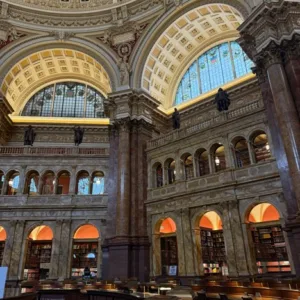
Beyond the workday, learning continues through classes and networking events right at the Wake Washington Center in the heart of Dupont Circle. Our coursework in geopolitics and geoeconomics could not be more topical to the world, and city, we currently live in. A moment that left me speechless in this way was missing my train one afternoon after the Chinese president Xi Jinping’s official diplomatic motorcade blocked the street between me and my metro station. There’s no doubt that following domestic and international news developments feels all the more real when it happens right in front of you. Such experiential learning has been supplemented by trips to the Library of Congress, the Capitol, and the National Cryptologic Museum, all of which have brought to life the exact networks that run our country and relations abroad. Wake Forest alumni working in the area have also been an exciting resource to hear from, taking time to talk to students who were in their same position years before. The alums’ presence within the Wake Washington Program speaks to the robust professional network that exists beyond our Winston-Salem campus, willing to impart knowledge and advice on how to build a career in D.C.
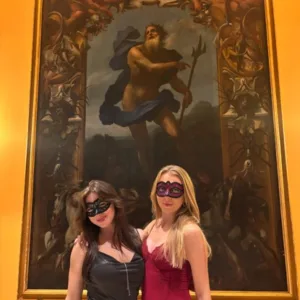
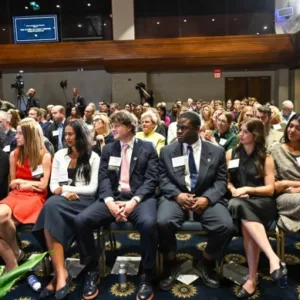
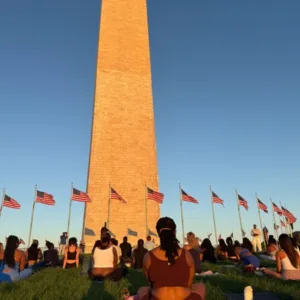
And finally, the “extracurricular” parts of my D.C. experience have undeniably brought me closer to a feeling of belonging in our nation’s capital. From greeting over 200 guests for an event on the future of public service at the National Press Club; attending the Venetian Masquerade Ball at the Italian Embassy and waltzing with the opera singer; yoga on the National Mall; and casually meeting someone who works at the World Bank during my lunch break in the park, everything is so uniquely D.C. It’s fast-paced and dynamic like no other city, with the people and the very culture shifting in real time with national headlines and politics. There is a restless passion that fills the streets, one that inspires a tradition of remaining informed with the world, developing opinions, and speaking up about them. You are consistently working to promote yourself and to perfect the seemingly fine art of the “D.C. coffee chat,” that it doesn’t leave much room for introversion. D.C.’s culture is undeniably one of quick connection, so much so that it’s almost easier to understand while moving at a faster pace.
So as I strive to grow into a professional and young person in this city, I will continue to run. Run to get to know D.C. better, and run to better understand myself as someone who is now a part of it. I can not wait to see what else is in store for my cohort and me this semester, and I am grateful to the Wake Washington Center for the opportunity to study within such a program.